Caregiver Stress: Signs, Causes, and Where to Get Real Support
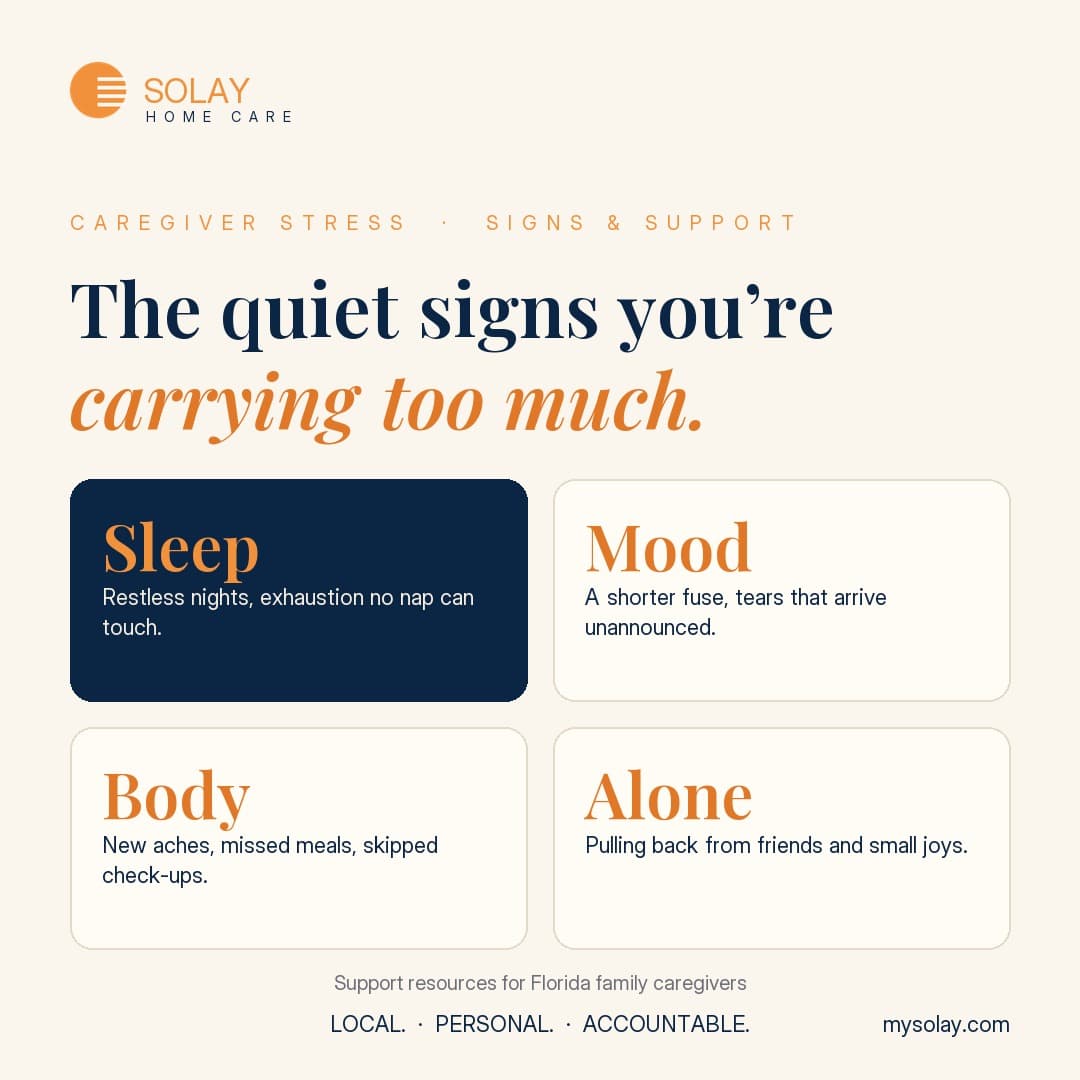
Nobody hands you a manual the day you become a caregiver. One week you’re a daughter, a husband, a son. The next, you’re also a scheduler, a nurse, a chauffeur, a cook, and the person who notices when something’s off. Caregiver stress is what builds when that workload outlasts your reserves.
According to AARP and the National Alliance for Caregiving, 6 in 10 family caregivers report high emotional stress, and nearly 40% say their situation is highly stressful. If you feel tired and a little frayed, you are not failing — you are in the majority.
How caregiver stress actually shows up
It rarely arrives as a single dramatic moment. It accumulates. Watch for:
Sleep that doesn’t restore you — you wake up already behind.
Shorter patience with the person you’re caring for, then guilt about it.
Dropping your own routines — doctor’s appointments, exercise, friendships.
Brain fog — forgetting appointments, losing track of conversations.
Physical symptoms — headaches, jaw tension, stomach issues, frequent colds.
Resentment that surprises you when it surfaces.
A flat feeling — not sad exactly, just… empty.
Three or more of these for more than two weeks is a signal, not a personality flaw.
What’s actually causing it
The research points to a small number of compounding factors:
Hours of care. Stress rises sharply past 20 hours per week and again past 40.
No backup. Solo caregivers report 2–3x the stress of those with a real second shift.
Cognitive decline in the care recipient. Dementia caregivers consistently report the highest strain.
Financial pressure. Lost income plus out-of-pocket costs average over $7,200/year per family caregiver.
Identity loss. When caregiving crowds out who you were before, burnout follows.
What actually helps (and what doesn’t)
Well-meaning advice like “take care of yourself” isn’t a plan. These are.
Get hours back on your calendar
The single most effective intervention is respite — hours each week where someone else is on duty so you can sleep, work, exercise, or just sit. Even a few hours a couple of times a week measurably lowers cortisol and improves sleep within a month. In-home companion care is one of the lowest-friction ways to create this; adult day programs are another.
Use the support resources that already exist
Most of these are free:
Eldercare Locator — 1-800-677-1116 — connects you to your local Area Agency on Aging.
AARP Family Caregiving — aarp.org/caregiving — guides, checklists, and a 24/7 line.
Family Caregiver Alliance — caregiver.org — state-by-state resources and care navigation.
Alzheimer’s Association Helpline — 1-800-272-3900 — 24/7, free, staffed by specialists.
CaringInfo — caringinfo.org — advance care planning tools.
Local senior centers and faith communities — underrated source of friendly volunteers and meals.
VA Caregiver Support — 1-855-260-3274 — if your loved one is a veteran.
In Florida, the Department of Elder Affairs (elderaffairs.org) runs a caregiver support program with respite vouchers. Many families don’t know they qualify.
Talk to someone whose job is to listen
Support groups — in person or online — lower stress meaningfully in randomized studies. Try one. If it’s not your thing, try a different one before deciding it’s not for you.
Move the small dials
Lock in one non-negotiable hour a day that belongs only to you.
Sleep is medicine. Protect a 7-hour window.
Walk outside daily — even 15 minutes lowers measured stress.
Eat real meals at a table, not standing up.
When to bring in paid help
Related reading
Ready to bring in paid help? How to choose in-home senior care walks through the questions to ask and the red flags to avoid.
If you're weighing a bigger change, elder care options explained compares home care, assisted living, and memory care side by side.
For Florida-specific data on the toll caregiving takes, read The Weight They Carry: Florida Family Caregivers 2026.