The Caregiver Crisis: 37 Million Americans Are Holding Up Long-Term Care for Free
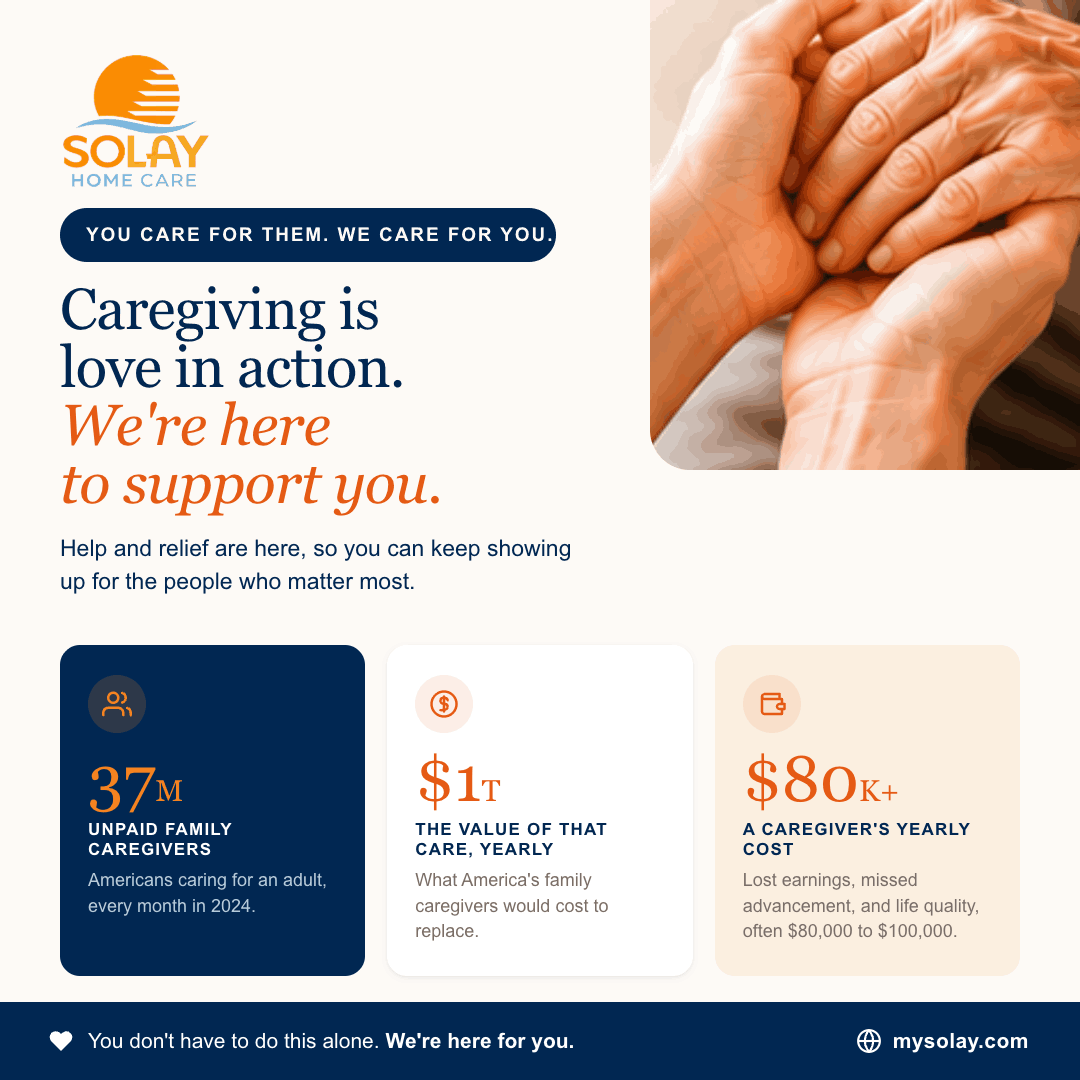
America's long-term care system runs on people no one is paying. Every month in 2026, 37 million Americans quietly care for an adult who can't fully live independently — a parent recovering from a fall, a spouse with dementia, a sibling who needs help just to get through the day. New research from the Penn Leonard Davis Institute (LDI), drawing on AARP's Valuing the Invaluable 2026, puts the scale of that hidden labor at nearly $1 trillion a year. It is the largest unpaid workforce in the country, and it is burning out.
If you're one of those caregivers — or you love one — this is what the numbers actually mean for daily life, and what's quietly starting to help.
The role is quietly costing them everything
The financial hit is staggering, but it's rarely the part caregivers talk about first. A daughter caring for her mother loses an estimated $80,000 to $100,000 in earnings, missed promotions, and reduced retirement contributions over the arc of caregiving. On top of that, the average family caregiver pays roughly $7,200 out of pocket each year for groceries, medications, transportation, home modifications, and the small daily expenses that never show up in a benefits brochure.
Then comes the part that doesn't fit on a spreadsheet. Researchers consistently find higher rates of depression, social isolation, disrupted sleep, and physical fatigue among family caregivers — especially the 13 million Americans caring for someone with dementia, the most physically and emotionally demanding role of all.
"Relying on unpaid caregivers to hold together our long-term care system is not sustainable. And it is wrong." — Rachel M. Werner, MD, PhD, Executive Director, Penn LDI
States are starting to pay caregivers back — slowly
With federal action stalled, a handful of states have begun easing the load on their own. Georgia, Missouri, Montana, New Jersey, North Dakota, and South Carolina now offer some form of caregiver tax credit. Washington's Cares Fund, payroll-funded and beginning its first benefits this July, can pay up to $36,500 for care — including, in some cases, to family members providing it. The federal Lifespan Respite Care Act was reauthorized through 2030, funding state grants so caregivers can finally take a break.
At the national level, the Credit for Caring Act would offer working caregivers a tax credit of up to $5,000. It, and similar bills, remain stuck in committee.
These are real steps. But a tax credit helps once a year. A break helps tonight.
We already know what helps. It just rarely reaches the family
The most striking finding in the Penn LDI brief isn't about money — it's about how solvable a lot of this is. When caregivers' own self-care improves, the people they care for see 67% fewer hospitalizations. Coaching, a supportive phone call, real care coordination, and even a few protected hours off measurably lower caregiver stress.
Most caregivers never get any of it. Not because the support doesn't exist, but because it's fragmented, hard to navigate, and almost no one tells you it's there until you're already past the breaking point.
What balanced caregiving actually looks like
There's a quiet but important shift happening in how families think about home care. It isn't an either/or — I do everything or I hand my mother over to strangers. The healthiest arrangements we see are blended: family stays at the center, and a small, consistent amount of paid help absorbs the parts that were grinding the household down.
For a lot of families, balance looks like this:
A second set of hands a few mornings a week, so the hands-on care no longer falls on one untrained family member doing it alone.
Respite that actually gets used — the break most caregivers never take, made simple enough that hours can scale up or down with the week.
One named coordinator who knows the situation, returns the call, and helps the family stop reinventing the plan every Sunday night.
The same caregiver, on purpose — matched to the family and kept consistent so a real relationship can build over time, instead of a rotating cast of names.
None of this replaces family. It protects it. The mother still has her daughter. The daughter still has her job, her sleep, and her own health. And the research is increasingly clear that this is exactly the kind of arrangement that keeps seniors out of the hospital and at home longer.
A practical first step
If you're caring for someone you love and the math of the week no longer adds up, you don't need to overhaul your life to start. Most families we work with begin with just a few hours — enough to cover a recurring hard window in the day — and adjust from there.
At Solay, every family gets one Guide who knows their situation, a Companion matched and kept consistent on purpose, and the kind of coordination this research keeps pointing to as the thing that actually moves the needle. We serve St. Petersburg and Pinellas County, Florida, and we're built for exactly the moment most families wait too long to ask for help.
You don't have to do this alone. You were never supposed to.
Source: N. Stedman, "America's Caregiver Crisis is Burning Out Millions of Families," Penn LDI, May 2026, drawing on AARP Valuing the Invaluable 2026; AARP/NAC; WA Cares Fund; AARP LTSS State Scorecard; and Riegel et al.